
Unit A, Castle Court
Bodmin Rd, Wyken
Coventry
CV2 5DB
Bodmin Rd, Wyken
Coventry
CV2 5DB
Home » Why Fast-Scaling Automotive Manufacturers Need a Managed Uniform Service
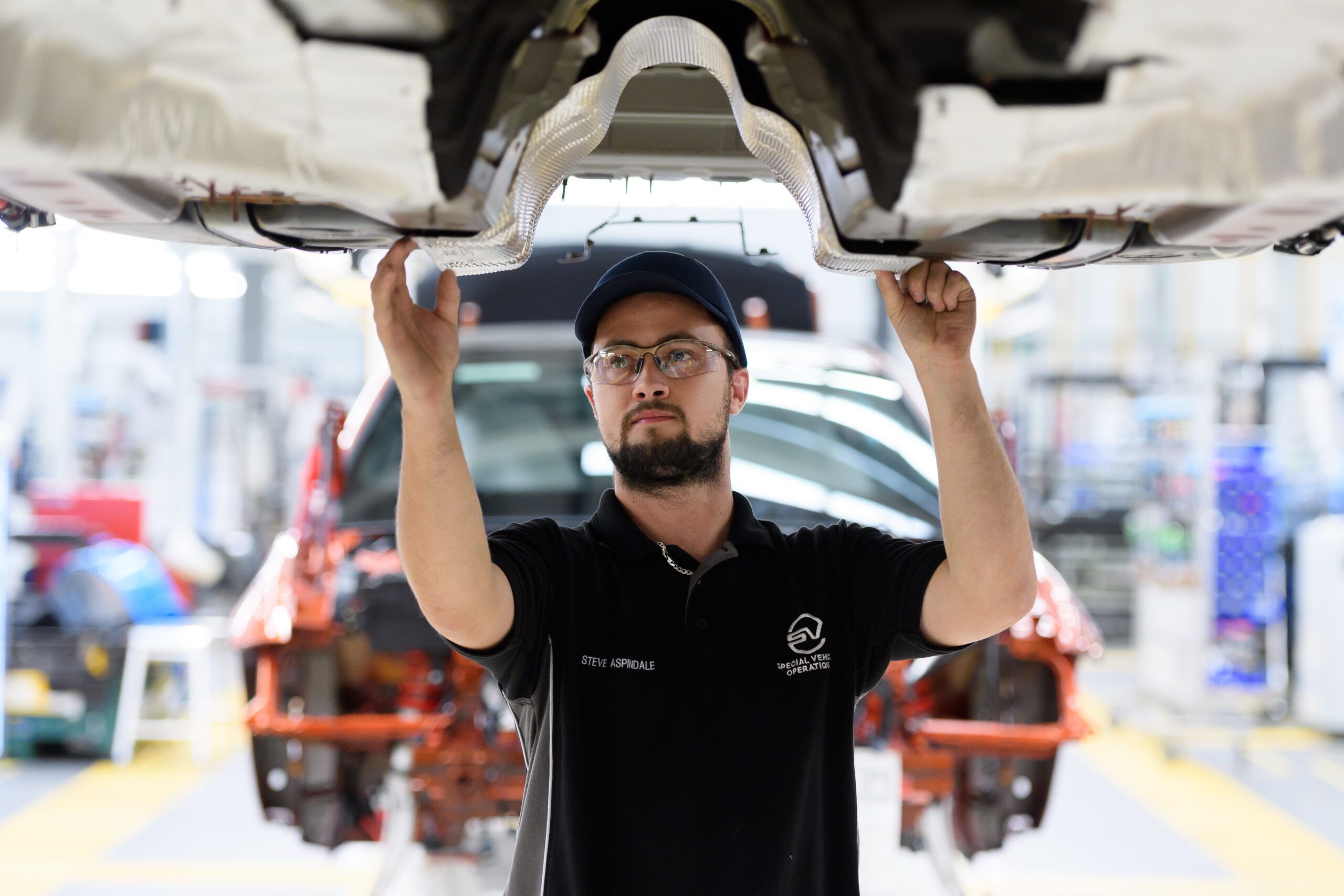
The UK government confirmed almost £130 million in combined government and industry investment for the automotive sector on 10 August 2026, backing next-generation zero-emission vehicles, self-driving technology and more affordable electric vehicles. Nissan is expected to direct funding into its Sunderland plant, with Bentley also named among the beneficiaries. Together, the projects are forecast to support more than 1,800 high-value manufacturing jobs. Source: Cardealermagazine, 10 August 2026
For the Operations Directors standing behind these expansions, the investment is good news operationally, but it exposes a familiar problem the moment headcount scales this fast: you need a managed uniform service, not ad hoc procurement, to keep pace with recruitment.
Hiring at volume compresses every part of the uniform supply chain. New starters need compliant, well-fitted uniform from day one, not week six. Sizing runs have to flex without warning. Site-specific PPE and compliance requirements multiply across shifts and production lines. And every new joiner is a brand touchpoint. What someone is handed to wear on their first day shapes how the employer’s investment actually feels to the people delivering it. Reactive, single-order sourcing struggles under this pressure: lead times slip, sizing gaps appear and brand consistency between the established workforce and hundreds of new starters starts to fray.
A managed uniform service replaces reactive ordering with a single point of accountability for design, sizing, dispatch and ongoing replenishment as a workforce grows. That distinction matters more, not less, when investment brings a hiring surge: it is the difference between uniform being a logistics bottleneck and uniform being a lever that gets new starters embedded and productive faster.
Murray Uniforms has managed Jaguar Land Rover’s uniform programme for more than 10 years, across a workforce that has scaled and evolved throughout that period. Over the life of the programme, garment longevity has doubled (from 12 months to 24 months) cutting both cost and waste as demand has shifted. That kind of durability under changing headcount is what PRINCE2-managed programme delivery and a high on-time dispatch rate are built to protect: uniform that keeps working as the organisation around it changes shape.
When an automotive manufacturer scales fast, it is tempting to treat uniform as a stockroom problem ie get people something to wear, deal with the detail later. The evidence says that is a mistake. Murray Uniforms’ research with Coventry University, based on more than 2,500 employees, ranked 21 uniform design factors by importance.
The top five were entirely functional:
Aesthetics ranked 13th.
That ordering matters directly for shop-floor and production-line roles: employees are not asking for uniform that looks impressive in an induction photo, they are asking for uniform that performs safely and comfortably across a shift, in the environment they actually work in. Getting that wrong during a hiring surge does not just cost morale, it undermines the compliance and safety standards a fast-scaling production line depends on.
The same research found that 70.9% of employees say uniform influences their willingness to join a company. For automotive employers competing for skilled manufacturing and engineering talent in a tight labour market, uniform is not incidental to the hiring pitch, it is part of it, from the first day a new starter reports for induction. The Science of Uniform®, Murray’s peer-reviewed, 240-element design methodology, exists precisely because getting uniform right involves far more variables than most in-house teams have the capacity to manage well mid-scale-up.
None of this is about buying more workwear faster. It is about the cost of a uniform programme being managed as a single, accountable service rather than a series of disconnected purchase orders triggered by each hiring wave. Manufacturers who treat uniform as project-managed infrastructure, rather than a reactive stockroom function, are better placed to absorb investment-driven growth without it showing up as delay, sizing gaps, or inconsistency on the shop floor.
As the £130 million investment translates into hiring over the next 12 to 18 months, automotive manufacturers scaling production have a narrow window to get this right before the gaps start to show. Murray Uniforms designs and manages uniform programmes for automotive manufacturers navigating exactly this kind of rapid, investment-led growth.
A managed uniform service is a single, accountable programme covering uniform design, sizing, dispatch and ongoing replenishment — run for an organisation on an ongoing basis, rather than sourced through one-off purchase orders.
Rapid recruitment compresses lead times, sizing runs and site-specific PPE compliance all at once. Reactive, order-by-order sourcing struggles to keep pace, which shows up as delayed kit for new starters, sizing gaps and inconsistent branding on the shop floor.
Yes. Murray Uniforms has managed Jaguar Land Rover's uniform programme for more than 10 years, achieving 98.8% wearer satisfaction across an 18,000-strong workforce and doubling garment longevity from 12 to 24 months over the life of the programme.
Function, overwhelmingly. The same research ranked uniform design priorities, the top result was comfort, with aesthetics ranking 13th.
Get in Touch

